
Wheelchair accessible vans
Minivan conversions for daily driving, and full-size lift vans for commercial and medical transport — new and pre-owned, from an independent dealer that carries more than one conversion brand.
Three kinds of wheelchair accessible van
Most confusion in this market comes from lumping three very different vehicles under one name. Here is how we separate them.
1. Rear-entry minivan conversions
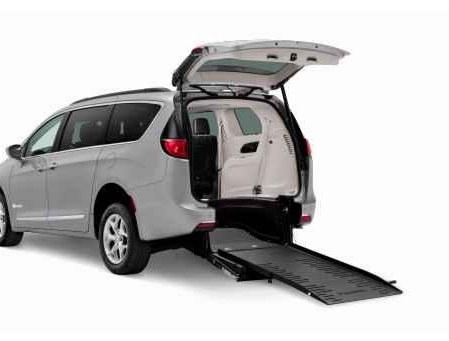
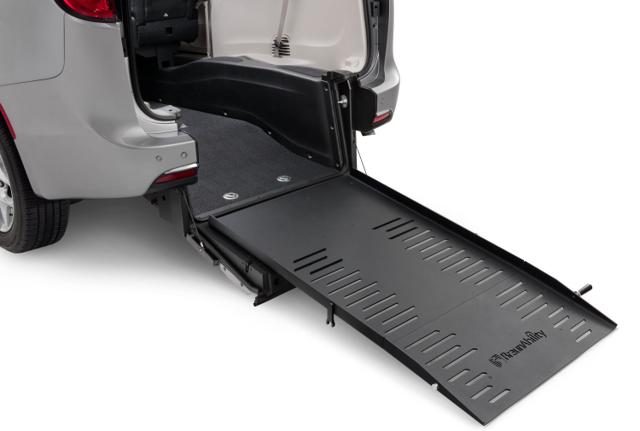
The rear of the minivan floor is cut and lowered into a channel, and a fold-out ramp deploys from the rear hatch. The wheelchair user rides in the center or rear of the vehicle. Rear-entry conversions are generally less expensive than side-entry, fit a longer or larger power chair, and can load from a normal parking space — there is no need for an empty space beside the van. The trade-off is that the wheelchair user cannot ride in the front seat or drive. Several of our vendors specialize in rear-entry conversions, including crash-tested designs on the Chrysler Voyager/Pacifica and Toyota Sienna platforms.
2. Side-entry minivan conversions
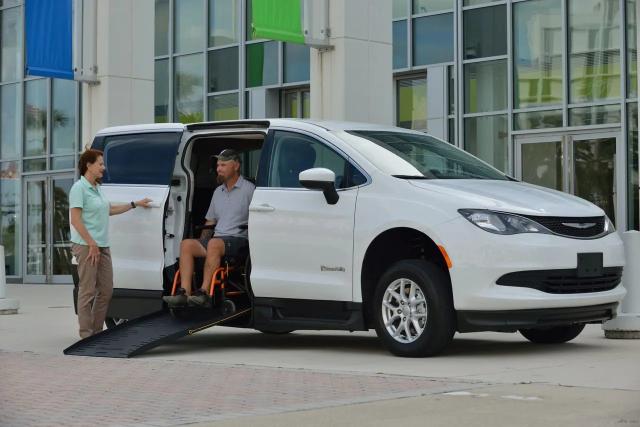
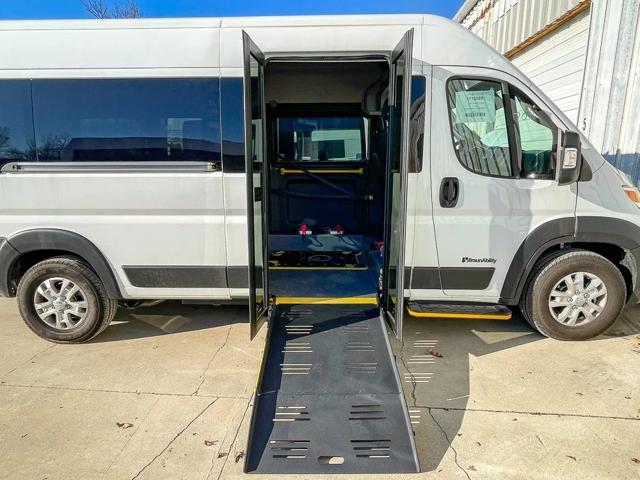
The floor is lowered across the entire cabin and the ramp deploys from the passenger-side sliding door — either folding out from inside the doorway (fold-out) or sliding out from beneath the floor (in-floor). Because the whole floor is lowered, the wheelchair user can position at the front passenger seat or, with hand controls and a driver securement, at the driver's position. Side-entry is the more common conversion type and the one with the widest model selection; it is also typically more expensive, and it needs roughly eight feet of clear space beside the van to deploy the ramp.
3. Full-size lift vans (Ford Transit, Ram ProMaster, Chevrolet Express)
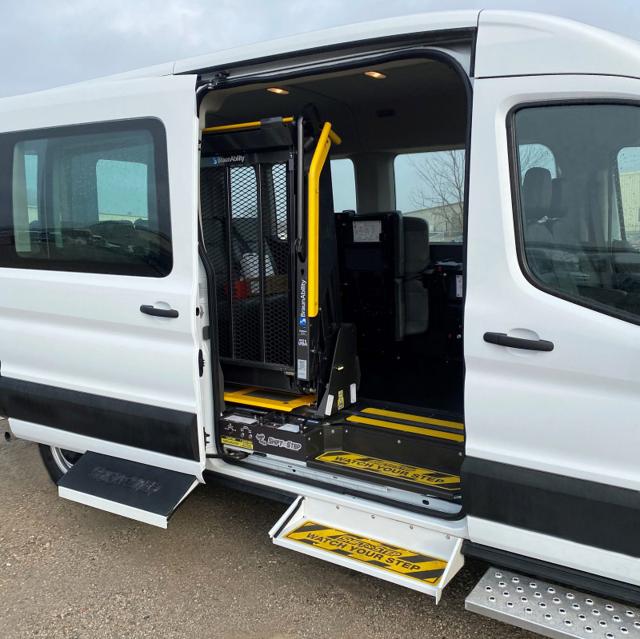
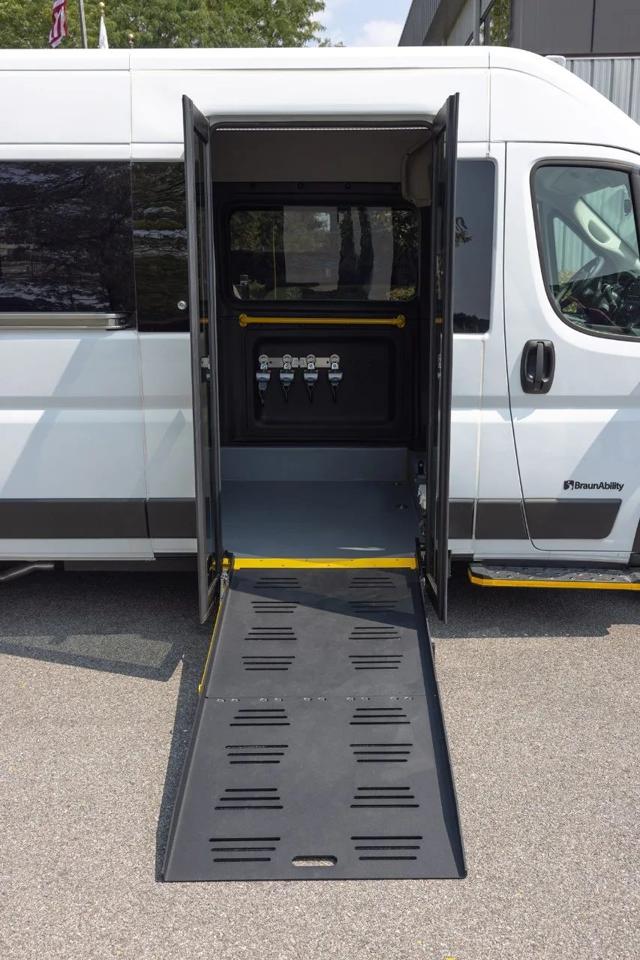
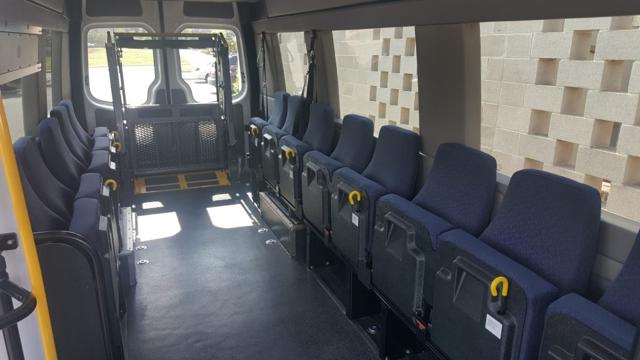
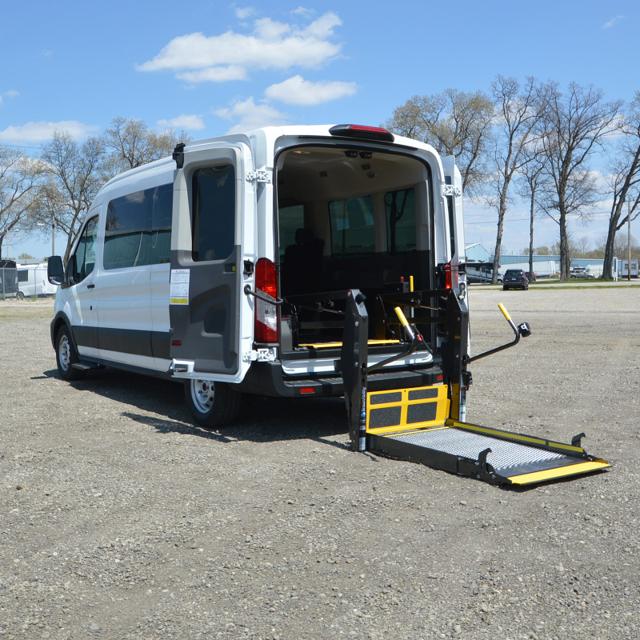
These use a platform lift — side or rear — rather than a ramp, and are built for volume: two to four wheelchair positions plus ambulatory seats, with commercial-grade securement systems and often a raised roof. This is the vehicle NEMT operators, adult day programs and group homes run every day. The lift must comply with FMVSS 403 and the installation with FMVSS 404; if the vehicle will be used in ADA-covered service it must also meet the vehicle specifications in 49 CFR Part 38. We explain those requirements here.
Our conversion sources
We hold a commercial dealership agreement with BraunAbility, the largest wheelchair van and lift manufacturer in North America, and we also sell conversions from VanAbility, ADABoy and Adaptive Vans. Carrying several brands is the point of being independent: it lets us quote a rear-entry conversion against a side-entry conversion, or a new unit against a two-year-old one, and let the numbers decide.
New or pre-owned?
A pre-owned conversion van with a documented service history is often the best value in this market, because the conversion itself — the lowered floor, ramp and securements — outlasts the chassis miles that drive the price down. New makes sense when you need a specific floor plan, a warranty that covers the conversion, or a vehicle for a grant or agency purchase that specifies new. Our guide to new vs. pre-owned covers what to inspect on a used conversion.
Questions we hear every week
What is the difference between a wheelchair van and a regular van with a lift?
A wheelchair accessible van is structurally modified — usually with a lowered floor and a ramp, or a raised roof/door and a platform lift — so a person can enter and ride while seated in their wheelchair. A standard van with a lift added but no securement system or floor modification is not an accessible vehicle in the ADA sense and should not be bought as one.
Can a wheelchair user drive the van?
Yes, with a side-entry conversion and the right hand controls and driver-position securement. Rear-entry conversions place the wheelchair user in the middle or rear of the vehicle, so they cannot drive from the chair.
How much does a wheelchair accessible van cost?
Prices vary widely with chassis, conversion type, and new versus pre-owned. We don't publish blanket ranges because they mislead more than they help; call us with your needs and we'll quote specific vehicles, new and used, side by side.
Do you have wheelchair vans with more than one wheelchair position?
Yes. Full-size Ford Transit and Ram ProMaster conversions with rear or side platform lifts can carry two to four wheelchair positions plus ambulatory seating, and are the workhorses of NEMT and adult-day fleets.
Tell us about the chair and the driver — we'll take it from there.
We'll quote realistic options, new and pre-owned, across the conversion brands we carry.
Request a quote Call (717) 932-6060